


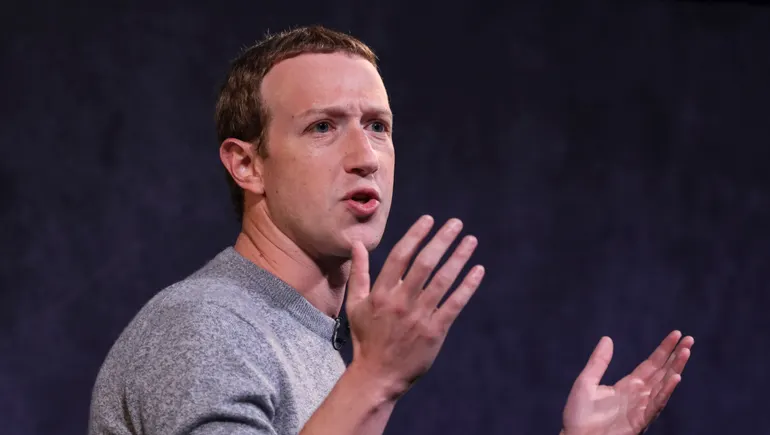
Meta released its Q2 2026 earnings, with advertising revenue up 27% year-over-year to $59.4 billion and total revenue reaching $60.8 billion. Despite strong performance from AI advertising products, earnings missed Wall Street expectations, and the lower end of the full-year capital expenditure range was raised, coupled with weak third-quarter guidance, putting pressure on the stock price.
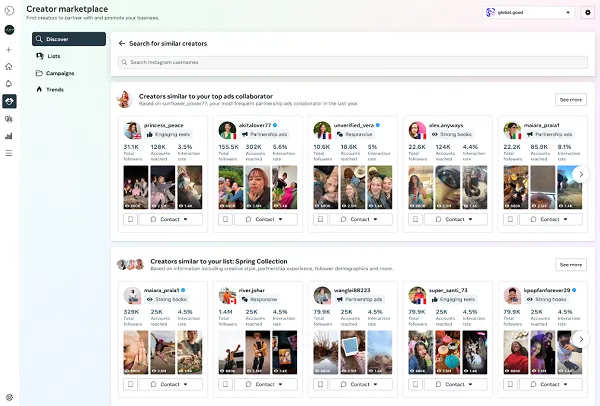
Despite being repeatedly declared declining, Facebook still maintains high usage rates. Based on Meta's official tools and data, this article outlines the fundamental steps for building an effective Facebook brand page in 2026: audience research, strategy development, and continuous optimization.
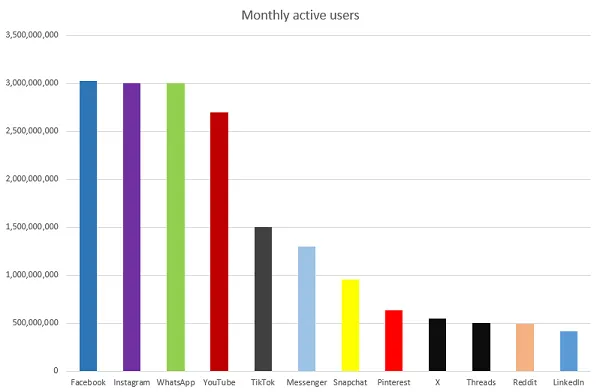
Meta's Facebook, Instagram, and WhatsApp each have 3 billion monthly active users, continuing to lead social media. Threads has reached 500 million monthly active users, approaching X's 550 million; Pinterest's monthly active users have risen to 631 million. YouTube follows Meta closely with 2.7 billion monthly active users, TikTok has not updated official data, and Snapchat is close to 1 billion. Data sources include official platform reports and third-party statistics such as Business of Apps.
Meta has invested tens of billions of dollars in AI, but the company has a history of repeated failures in self-driven innovation projects, and there is a gap between the actual effectiveness of AI applications and its promotional claims. This article analyzes whether Meta can win in this AI race and the prospects for its investment returns.
Meta was recently sued by 26 employees over its May layoffs, accusing its AI-driven layoff system of failing to account for employees' protected leave during scoring and screening, resulting in these employees being disproportionately let go. The lawsuit claims this violates laws such as the ADA and FMLA, while Meta responded that the allegations lack factual basis.

The proliferation of AI-generated content has become one of the biggest challenges facing social media. According to tracking by Pangram, LinkedIn leads with 41% of long-form posts suspected to be AI-generated, followed closely by X. Although platforms attempt to restrict or label AI content, user aversion to forced AI tools is growing, shaking the foundation of authenticity in social media.
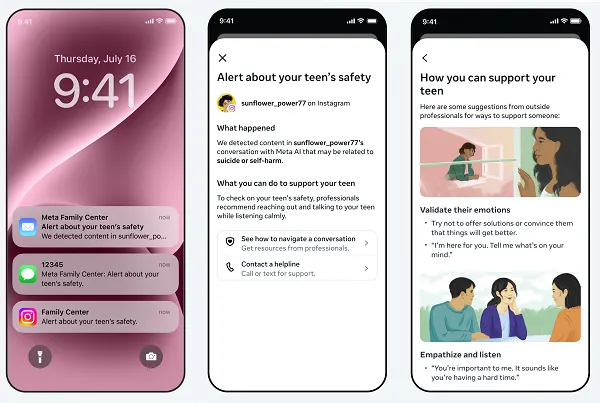
Meta is introducing new safety measures for Meta AI, including parental alerts for conversations with teens on sensitive topics, as well as an emergency services contact system for all users. This move aims to address the growing trend of teens increasingly relying on AI chatbots for mental health advice.
The European Commission has preliminarily ruled that Meta's Facebook and Instagram violate the Digital Services Act due to addictive design features such as infinite scrolling, autoplay, push notifications, and highly personalized recommendation systems. Meta is accused of failing to adequately assess the potential risks of such designs to users' physical and mental health, including minors and vulnerable adults, and its existing mitigation measures (such as session time limits and parental control tools) are considered insufficient. If the final ruling is upheld, Meta may face fines of up to 6% of its global annual turnover and will need to make substantial design changes to the aforementioned features.

Meta announced the launch of Muse Image, an AI reasoning-based visual creation and remixing tool developed by Superintelligence Labs. The tool allows users to place pets into famous paintings, generate party invitations, and more, and supports use on Instagram and WhatsApp. However, Meta also allows users to AI-remix public Instagram images unless users explicitly opt out. This move has raised questions in the industry about the practicality and authenticity of AI tools, especially in light of Meta's AI head admitting that existing AI experiences are 'not significantly better.'

Meta is updating disclosure labels for AI-generated content in Facebook and Instagram ads to ensure consistency with recent changes to its ad disclosure list. The new labels will be automatically applied to images or videos created or significantly edited using Meta's generative AI features, such as background generation, image generation, or adding animations, as well as content generated through third-party tools like Photoshop and DALL-E. Meta will adopt industry-standard detection methods, such as C2PA, to identify third-party AI content, and will continue collaborating with experts, advertisers, policymakers, and industry partners to refine labeling strategies as technology evolves.