


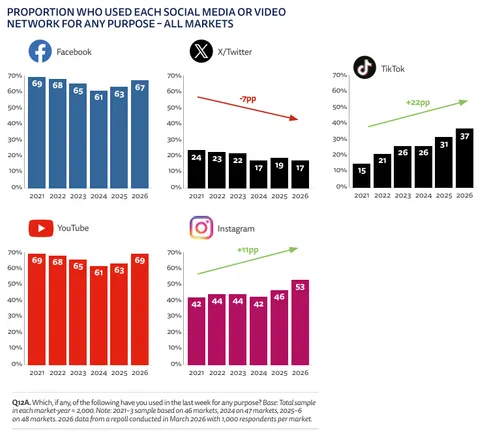
The Reuters Institute released its 2026 Digital News Report, based on a survey of over 85,000 respondents across 48 regions, revealing that social media has become the primary channel for news consumption, with TikTok and Instagram gaining influence, X (formerly Twitter) usage declining, and the rise of AI chatbots as news sources also drawing attention.
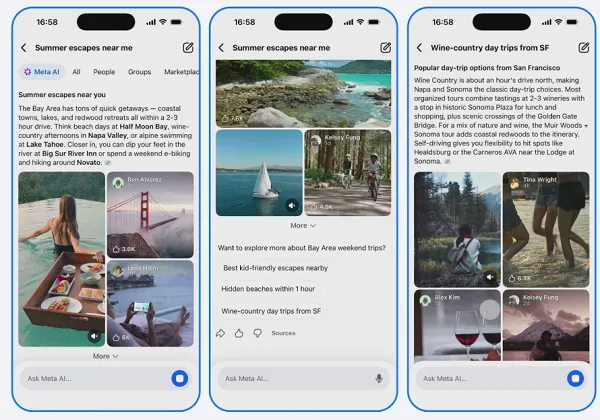
Meta recently launched several new AI features for Facebook: upgraded AI search integrates group and Reels content, providing answers based on real user perspectives; new photo and video editing tools support automatic collage and transition effects; and AI outfit presets have been introduced to make it easy for users to change clothing in photos. These initiatives aim to tap into the potential of user-generated content but face public skepticism about AI's value and internal cost pressures.
As multiple countries consider implementing bans on teen social media use, Meta has released a new post reiterating its core concern: such bans will not be effective without a universal and enforceable mechanism. In the post, Antigone Davis, Meta's global head of safety, detailed the privacy and security challenges currently facing age verification, and cited the implementation effects of Australia's ban as an example, again advocating for age verification and parental approval to be centralized at the app store level of Apple and Google.

Meta released its 2026 holiday marketing guide mid-year, covering three key areas: Reels brand exposure, creator collaborations, and shopping process optimization, supplemented with consumer behavior data and quarterly execution recommendations.
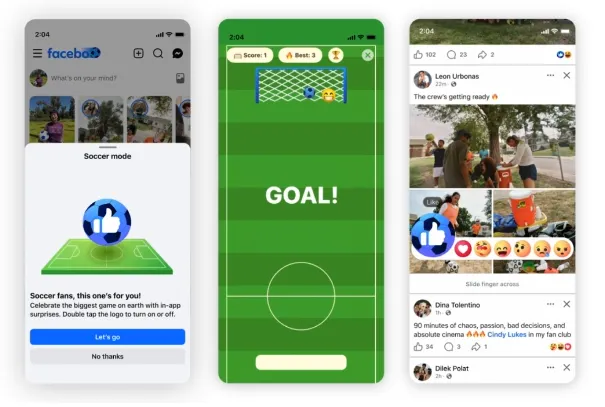
Meta recently unveiled a series of cross-app new features for the 2026 FIFA World Cup, covering Threads, Instagram, Facebook, Messenger, and WhatsApp. These features aim to help users track matches in real time, engage in interactions, and show support, including live chats, score alerts, AI effects, themed stickers, and more.