


Snapchat
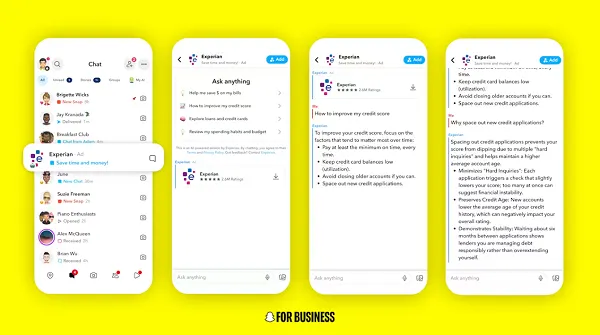
Snapchat has officially launched sponsored AI chatbot ads, enabling brands to embed customized bots in users' direct messages, where users can interact with the bots through suggested prompts. This feature builds on Sponsored Snaps, with Experian as the pilot partner. Despite potential risks to user privacy and experience, Snap is optimistic about its conversion effectiveness.

Snapchat is introducing place loyalty badges in Snap Map, awarding gold, silver, and bronze levels to frequent visitors (top 25%) based on their visit count over the past year. The badges are only visible to the user, but shareable stickers can be generated. This feature may enhance user engagement but also raises privacy concerns.

After Snap announced a 16% workforce reduction, CFO Derek Andersen will step down in May and be succeeded by Doug Hott. The company faces dual challenges of stagnant user growth and competition in the AR glasses market.

Snap announced cutting 16% of full-time employees, involving about 1,000 people, while closing over 300 open positions. CEO Evan Spiegel stated that this move aims to optimize investment directions and leverage AI to improve efficiency, expecting to reduce the annual cost base by more than $500 million by the second half of 2026. Despite an 11% year-over-year revenue increase to $5.93 billion in 2025, stagnant user growth and high investment in the AR glasses project have raised market concerns.
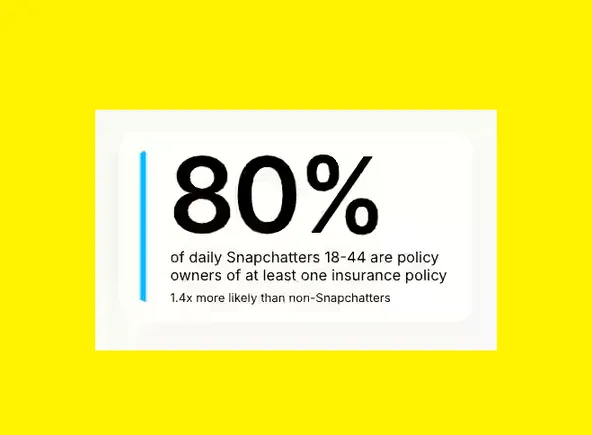
Snapchat's latest report indicates that its users are mostly proactive insurance decision-makers, with an insurance ownership rate 1.4 times higher than non-users, and 82% are considering switching providers. The platform may become an effective channel for insurance brands to reach young, high-net-worth individuals.
Snap's AR hardware division Specs announced a multi-year strategic cooperation with Qualcomm, which will provide Snapdragon XR chipsets for its AR glasses planned for release later this year. This is Specs' first strategic agreement since operating independently in January, aimed at ensuring supply chain stability, but facing competition from giants like Meta and Apple, its market prospects still face challenges.

Snapchat recently published an official blog post positioning Snapcodes QR codes as a key marketing tool for advertisers, claiming they offer a more immersive and customizable brand experience than ordinary QR codes. The feature has been available to advertisers since 2017, allowing brands to embed logos, link to AR filters, and enhance analytics within the codes. Despite fluctuating historical usage of QR codes, Snap believes its solution has advantages and provides examples from retail, packaging, and TV advertising.

Snapchat recently disclosed that its public group Topic Chats feature, launched last November, is gradually gaining user acceptance, particularly performing well during the March Madness basketball tournament. Official data shows that the relevant topic groups have accumulated over 45,000 participants, with a peak of approximately 40,000 concurrent users. Snap views this data as a key signal of the viability of group chats in real-time event discussions. Although there is still a gap compared to the activity scale of X or Threads, it may provide Snap with new user engagement and monetization opportunities amid slowing growth.
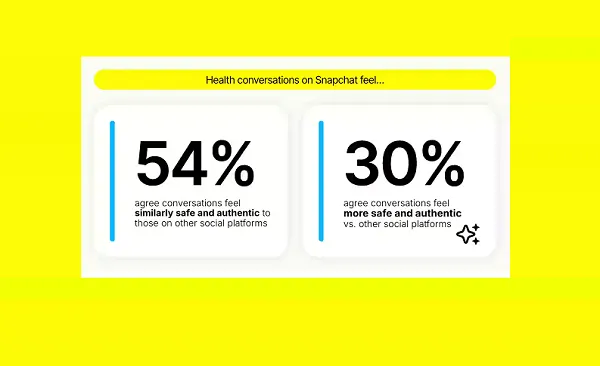
A joint survey by Snapchat and Ipsos shows that among US daily active users aged 18-45, 95% are interested in health, 58% rely on social platforms to research complex health topics, and 61% use them to compare treatment options. Although Snap views this as a marketing opportunity for pharmaceutical companies, concerns about the reliability of online health information have been raised.