


Latest news

Snapchat announced the launch of a series of AI-driven advertising tools, covering chatbots in the Ads Manager, intelligent recommendation models for dynamic product ads, creative enhancement features (such as Smart Upscale and image-to-video), open support for third-party AI agents, and a new Snap Creator Network. These updates aim to simplify the ad setup process, improve ad precision and creative quality, and help brands match with creators more efficiently. The company is also facing declining user numbers in the US and Europe, and the new tools may help improve monetization efficiency of the existing audience.
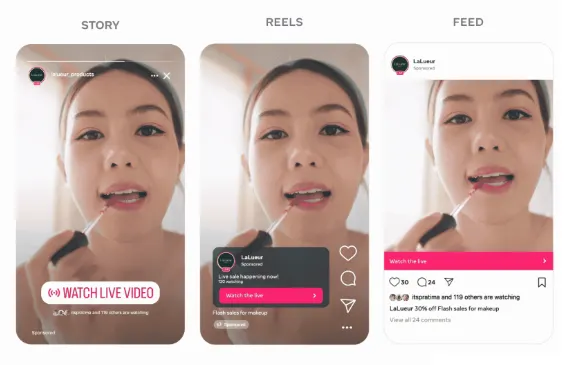
Meta recently announced multiple updates to its live shopping options, aimed at driving purchases during live streams. The updates include expanding live video ads to Instagram and globally launching them on Facebook, adding new Facebook live shopping tools, supporting virtual card payments, and broadening affiliate marketing partnerships. Additionally, Meta has optimized its AI systems for product data matching and ad assembly to enhance audience response and promotional effectiveness.
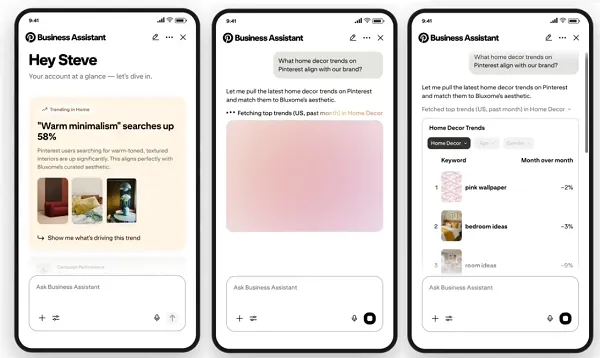
At the Cannes Lions International Festival of Creativity, Pinterest unveiled multiple AI tools, including a business assistant for advertisers, dynamic creative selection features, and the Ask Pinterest app for consumers, to explore the next generation of shopping experiences.
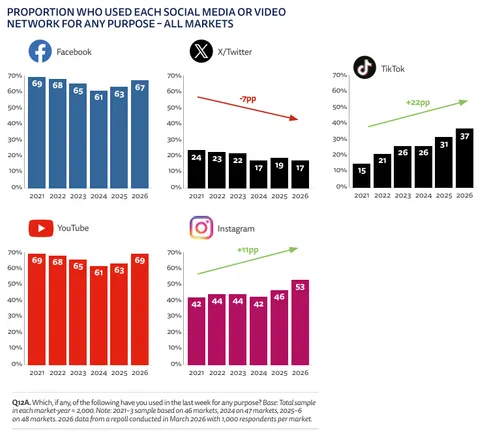
The Reuters Institute released its 2026 Digital News Report, based on a survey of over 85,000 respondents across 48 regions, revealing that social media has become the primary channel for news consumption, with TikTok and Instagram gaining influence, X (formerly Twitter) usage declining, and the rise of AI chatbots as news sources also drawing attention.

Snap has announced that pre-orders for its augmented reality glasses, Specs, are now open. The device uses a fully integrated computing solution and does not require an external computing unit. The product weighs 132 grams (small size) and 136 grams (large size), and is equipped with self-developed silicon-based liquid crystal display technology, offering a field of view of 51 degrees and supporting 16 million colors. It is priced at $2,195 (including a $200 refundable deposit) and is expected to compete with AR glasses that Meta will launch next year.

TikTok has updated its shopping livestream rules, explicitly listing AI-generated voices, pre-recorded audio, and broadcasts as prohibited content, requiring hosts to engage in real-time interaction. This move contrasts with its previous strategy of promoting AI virtual hosts, possibly in response to the deteriorating experience caused by some brands playing repetitive AI content around the clock.

Pinterest has added new customer acquisition capabilities to its AI advertising suite Performance+ and launched one-click shopping ads for Shopify merchants, aiming to attract more small and medium-sized business customers.
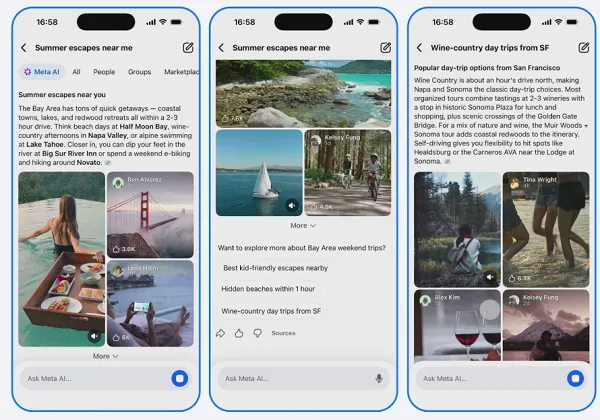
Meta recently launched several new AI features for Facebook: upgraded AI search integrates group and Reels content, providing answers based on real user perspectives; new photo and video editing tools support automatic collage and transition effects; and AI outfit presets have been introduced to make it easy for users to change clothing in photos. These initiatives aim to tap into the potential of user-generated content but face public skepticism about AI's value and internal cost pressures.

TikTok and Panini have partnered to release digital trading cards for the 2026 FIFA World Cup, totaling 144 cards covering 48 teams. Users can obtain cards by completing daily tasks and reaching specific milestones, with duplicate cards being tradable. This move is seen as a strategy by TikTok to boost user engagement during the tournament, though the company has explicitly stated that these cards are not NFTs.

As multiple countries consider implementing bans on teen social media use, Meta has released a new post reiterating its core concern: such bans will not be effective without a universal and enforceable mechanism. In the post, Antigone Davis, Meta's global head of safety, detailed the privacy and security challenges currently facing age verification, and cited the implementation effects of Australia's ban as an example, again advocating for age verification and parental approval to be centralized at the app store level of Apple and Google.